
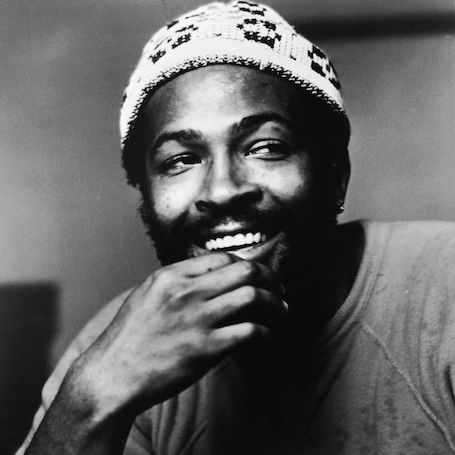
Marvin Gaye gave the world some of the most beautiful, socially conscious and emotionally powerful music in soul history. His voice could sound tender one moment and wounded the next, carrying a depth of feeling that made millions of listeners feel understood.
But behind that extraordinary voice was a complicated personal life marked by family conflict, spiritual searching, creative pressure and painful struggles. His story reminds us that the people who give us music capable of healing others may also be fighting battles of their own.
A voice shaped by Motown
Born Marvin Pentz Gay Jr. in Washington, D.C., in 1939, Marvin grew up singing in church. Music became an important part of his life early on, although his relationship with his father was difficult and deeply affected him.
After moving to Detroit and becoming involved with Motown, Marvin developed into one of the label’s most distinctive recording artists. His early success included songs such as Stubborn Kind of Fellow, Pride and Joy and How Sweet It Is (To Be Loved by You).
Motown’s early image was built around polished performances, catchy melodies and crossover appeal. Marvin, however, increasingly wanted to explore more personal subjects and make records that reflected the world around him.
The struggle to find his own voice
Marvin’s ambition went beyond making hit records. He wanted greater creative control and the freedom to explore themes that mattered to him.
That ambition came into focus with What’s Going On, released in 1971. Inspired in part by the social unrest and human suffering he saw around him, the album addressed war, poverty, environmental damage and the need for compassion.
The project was a landmark moment in his career. Rather than simply delivering a collection of singles, Marvin created a cohesive musical statement that challenged expectations of what a Motown album could be.
Its success helped establish him as an artist who could combine commercial appeal with serious social reflection.
Love, family and personal turmoil
Marvin’s private life was often far less peaceful than the music he created. His relationships, family pressures and personal struggles placed a heavy emotional burden on him.
His marriage to Anna Gordy, sister of Motown founder Berry Gordy, became an important part of his personal and professional story. The relationship eventually broke down, and the difficulties surrounding their separation contributed to a period of uncertainty in Marvin’s life.
His later marriage to Janis Hunter also became part of a complicated personal chapter. Through these experiences, Marvin continued to search for stability, meaning and a sense of control over his own life.
It is important not to reduce his story to suffering alone. Marvin was a gifted, ambitious and complex man whose life contained joy, humour, creativity and moments of profound artistic achievement as well as hardship.
From romantic soul to raw honesty
Marvin’s music could move effortlessly between intimacy and social commentary. Let’s Get It On explored sensuality and desire, while Mercy Mercy Me (The Ecology) and Inner City Blues (Make Me Wanna Holler) confronted wider social concerns.
That emotional range helped make him such an enduring artist. He did not present a single, uncomplicated version of himself. His records could express tenderness, frustration, hope, vulnerability and longing—sometimes within the same musical world.
For listeners, this honesty remains part of his appeal. The songs feel personal because they allow room for conflicting emotions rather than pretending life is always simple.
A legacy that continues to resonate
Marvin Gaye’s life ended tragically in 1984, shortly before his 45th birthday. His death was a devastating loss, but it did not end the connection between his music and the generations who continue to discover it.
His influence can be heard across soul, R&B, hip-hop and contemporary popular music. Artists have drawn inspiration from his phrasing, his willingness to experiment and his ability to make deeply personal feelings speak to a wider audience.
More than four decades after his death, songs such as What’s Going On, I Heard It Through the Grapevine and Sexual Healing remain part of the soundtrack of our lives.
The man behind the music
Marvin Gaye’s story is not simply a tale of genius overcoming adversity. It is the story of a gifted human being navigating the pressures of fame, complicated relationships and the search for personal and artistic freedom.
His music endures because it gives voice to emotions that are difficult to put into words. It reminds us that behind every timeless recording is a human being—and that the most powerful music often emerges from a life full of contradictions.
At Grown Folks Music, we celebrate not only the records that shaped a generation, but also the stories behind them. Because when you understand something about the person behind the voice, you may hear the music differently the next time you press play.
Further reading